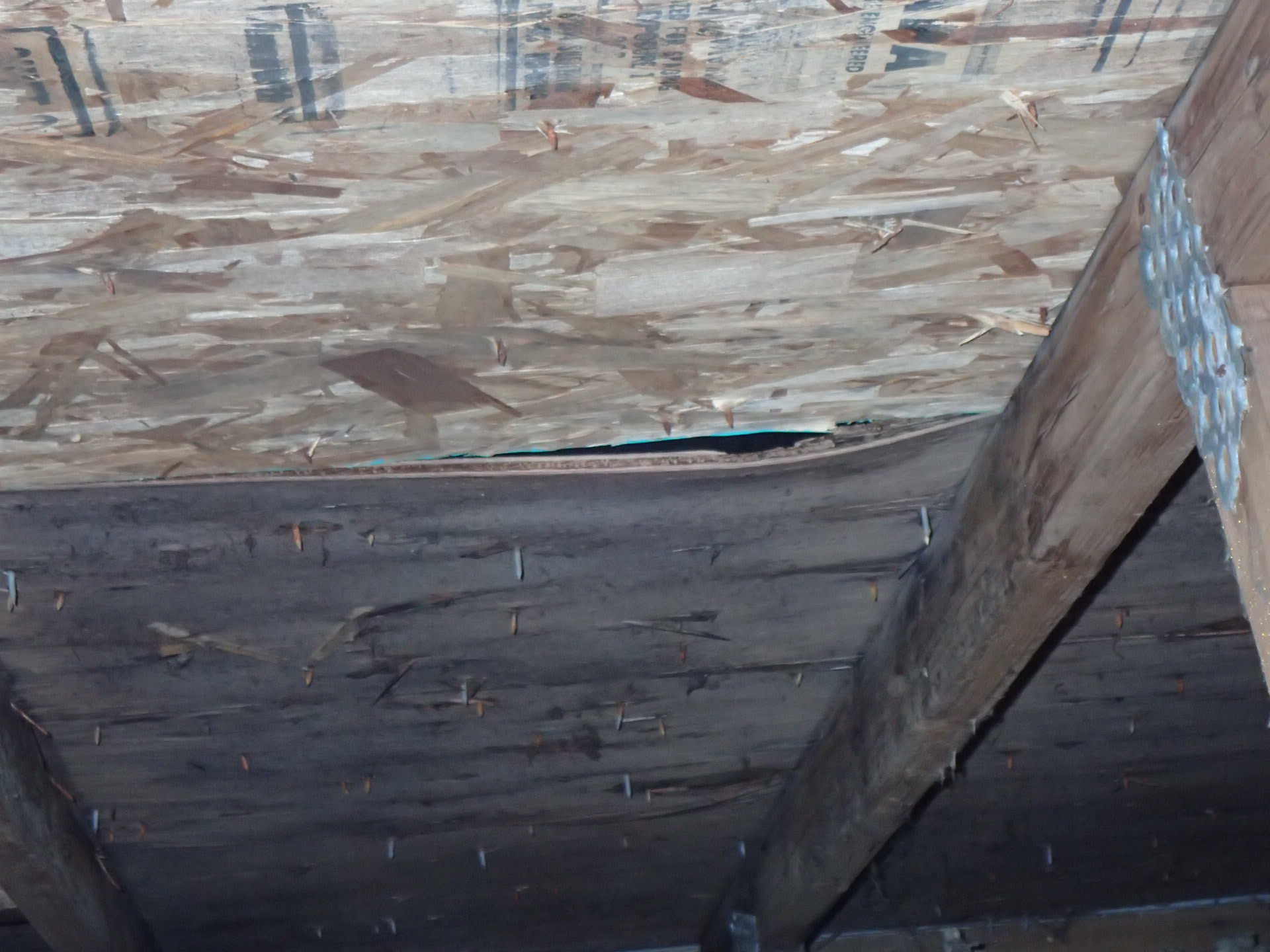
When the membrane and insulation separate.
May lead to delamination of the roof sheathing.
Like blisters delamination can come from improper installation in inclement weather.
One of the implications of high moisture levels from either condensation or leakage is delamination of plywood sheathing.
To improve it make sure your home has continuous ridge and soffit ventilation.
Particularly on the roof.
This may be indicative of what.
Roof decking plywood delamination if you have a home twenty five years or older you may want to consider the condition of the plywood.
De lamination of the roof sheathing may cause.
In the attic the roof sheathing appears to be delaminating and some staining was observed.
What might delamination of the roof sheathing lead to.
First deal with the cause which is inadequate attic ventilation.
It was plywood and had delaminated.
The attic was vented by soffit and a ridge vents.
The soffits didn t appear to be congested with insulation however the ridge vent had a filter in place.
Incidental roof leaks particularly ones that go unnoticed can delaminate plywood sheathing or cause osb to swell.
What is the spacing requirements between the insulation and the roof deck sheathing at the location of the vent.
If the environment is humid moisture can get trapped between the membrane and insulation.
I had my roof sheathing replaced a year ago.
This winter i went up.
The horizontal board enclosing the ends of the rafter projections or tails is normally referred to as the board.
Depression between the rafters.
Delaminations commonly affect single ply and fully adhered roofs.
Leaks around deteriorated flashing are the most common.
Panel type roof sheathing may lift off the rafters in a regular pattern.
The worst cases result in patches of rot.
3 8 plywood roof sheathing.
If this is the case the solution is twofold.
But probably not due to the amount of delamination.
Between the years of around 1964 to 1975 homes being built saw the installation of what was first generation fire retardant plywood.
That being said what the home inspector saw may or may not be mold.
Defects in those sheets or it could be that the ventilation was blocked only at those sheets.
The contractor thought it might have been due to excess moisture in the attic.
Every re roof requires a close inspection of the substrate.
This is sometimes accompanied by buckling.
In determining if it is.
High moisture levels break down the glue in the plywood and allow the plies to delaminate.