Marble is calcium carbonate and thus behaves in the same way.
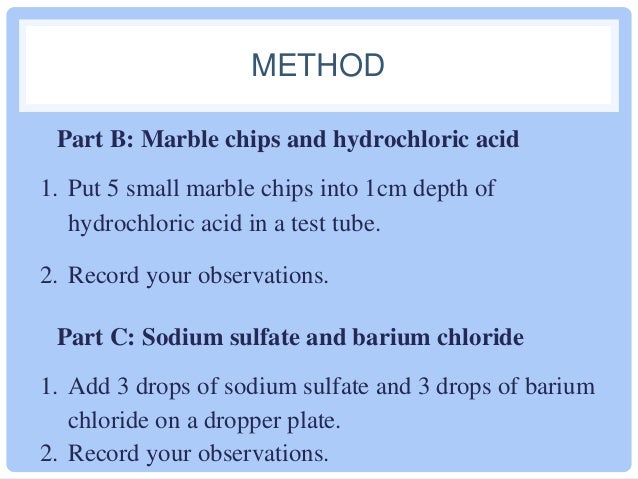
Marble chips and hydrochloric acid experiment method.
An outline of an experiment that could be used to find the time and hence rate of reaction of marble chips and hydrochloric acid.
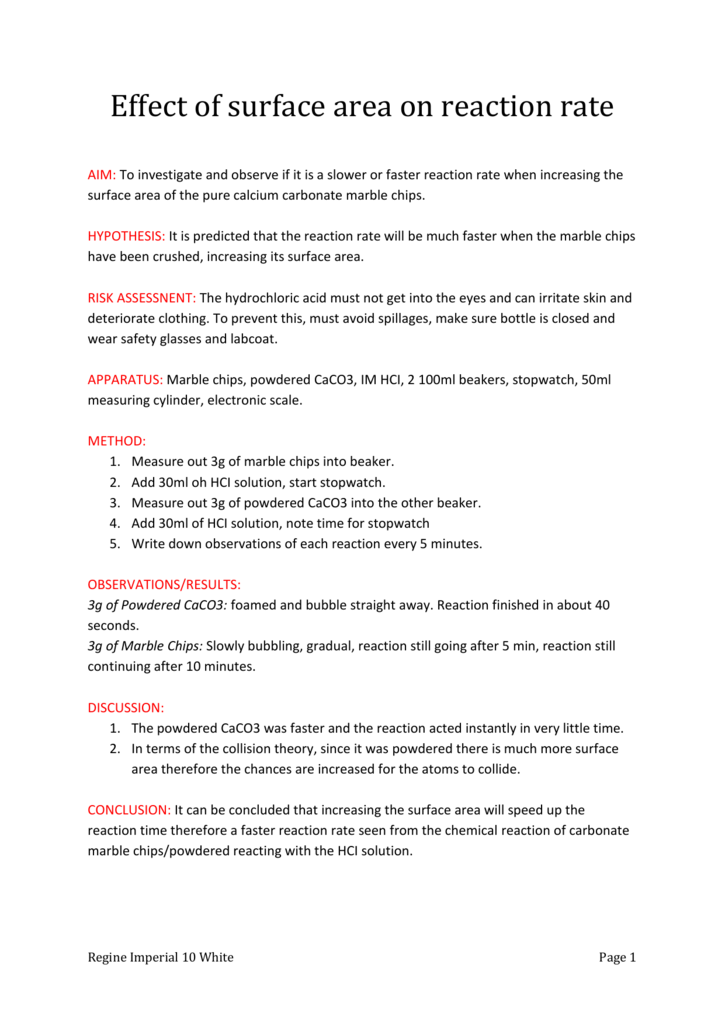
Plugged in scientific scales and weighed out 1g of marble chips for each test tube.
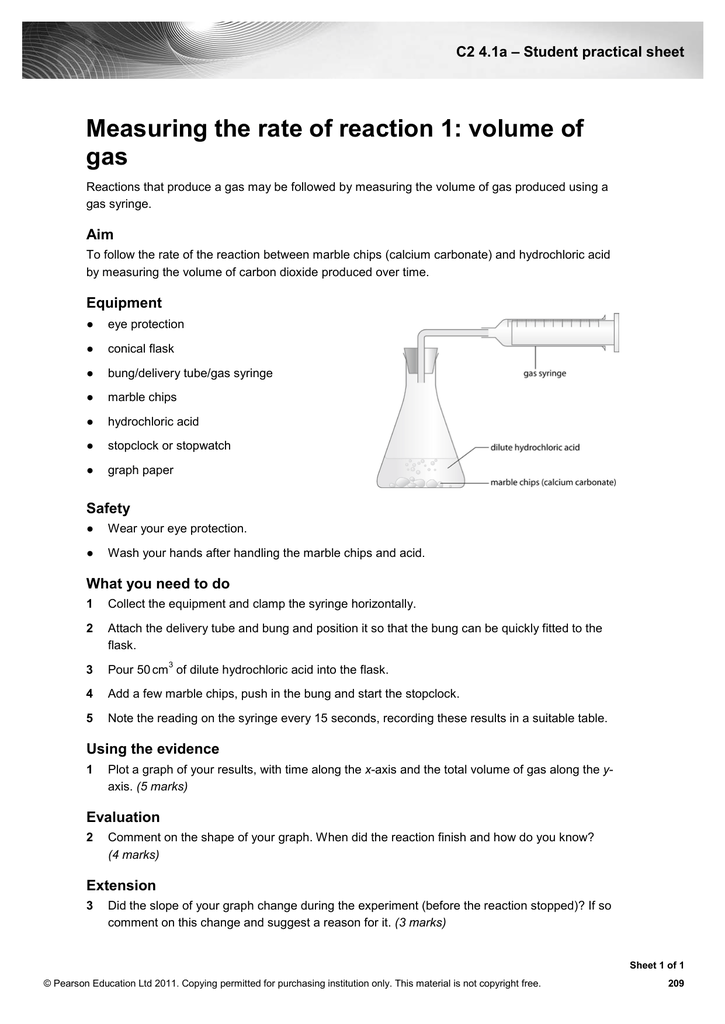
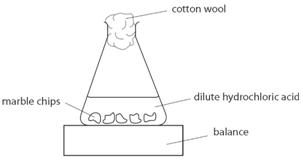
Using the apparatus shown the change in mass of carbon dioxide can be measure with time.
There are many variables that affect.
Measured out 1ml of water in a 10ml measuring cylinder and placed into the test tube labelled 2.
I predict the higher the concentration of hydrochloric acid faster the reaction rate and more carbon dioxide will be produced as the time increases.
Calcium chloride solution is also formed.
Marble chips and acid are placed in the flask but separated by a piece of card preventing the reaction from proceeding.
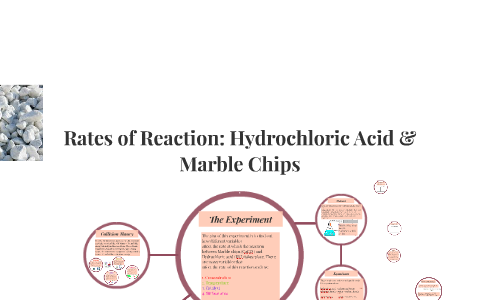
This is due to the collision theory.
Cacl2 aq h2o l co2 g in this experiment i am going to see if temperature affects the reaction rate between marble chips and hydrochloric acid by timing the release of carbon dioxide in the reaction.
An investigation of the reaction between marble chips and hydrochloric acid.
To start the reaction the flask is gently lent to one side causing the card to fall and the marble chips and acid to mix.
Caco3 s 2hcl aq 61614.
I predict the higher the temperature the.
Marble chips calcium carbonate caco 3 react with hydrochloric acid hcl to produce carbon dioxide gas.
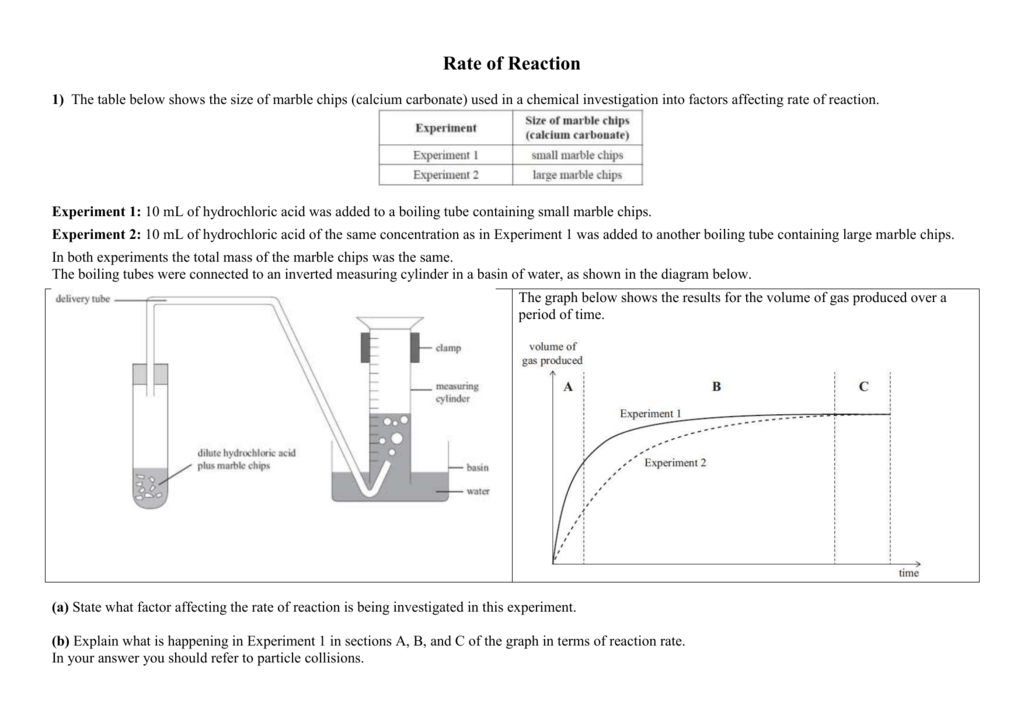
The rate of this reaction can be changed by changing the size of the marble chips.
Hydrochloric acid to react with the marble chips independent variable marble chips to react with the acid dependent variable stopwatch to accurately time the experiment spatula to handle the marble chips measuring cylinder to precisely measure out different concentrations of hydryochloric acid electric balance to measure the mass g of the marble chips bung.
Marble chips react with dilute hydrochloric acid to produce carbon dioxide gas.
In high concentrated acid the particles of the marble chip will move faster due to the more collisions between the particles of marble chips and the acid.
Marble chips placed onto pieces of paper.